
'Our stable outlook currently points to the fact that the ratings are likely to remain stable for the next couple of years.'

'Government is saying that I will not be responsible for ensuring you get MSP but traders and large corporate will be responsible. 'India now is the only country that is saying such things'

The government's focus on road, rail and power development will indirectly benefit the FMCG industry in the long run.

'We can go somewhere between 35 per cent and 40 per cent.'

'Equities are likely to be range-bound with a downward bias for the remaining part of the year.'

In a rare gesture, not only the legislators of the ruling Communist Party of India (Marxist)-headed Left Democratic Front and Congress-led United Democratic Front, but the lone Bharatiya Janata Party member in the 140-member state assembly, O Rajagopal, also supported the resolution against the Centre, saying 'it is the democratic spirit'.

Thanks to rupee depreciation, India has a chance to fundamentally rework its stifled manufacturing sector.

Finance Minister Nirmala Sitharaman's Rs 30,600 crore government guarantee for the bad bank has changed the body language of bankers for the better, observes Tamal Bandyopadhyay.

China's economy picked up pace notching up 7.4 per cent year on year growth in the first half of 2014, the National Bureau of Statistics (NBS) said on Wednesday.

Rajan said that central banks should not ignore global responsibilities.
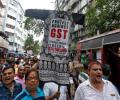
After 17 tumultuous years, a nationwide Goods and Services Tax (GST) will rollout from midnight of June 30, overhauling India's convoluted indirect taxation system and unifying the $2 trillion economy with 1.3 billion people into a single market.

Mr Modi must stop talking, and start writing

At present, Indian indices are under-performing as compared to others and a package from the government can help cover the ground.
Macroeconomic management is usually a lot more comfortable with lower fiscal deficits. The sooner we get there, the better for the economy, says former Chief Economic Adviser to the Government of India Shankar Acharya.
Macro and micro environment are becoming more challenging.

Nobody bothered to articulate the upsides; instead, the four-year tour of duty and denial of life-long pensions got played up.
Job-seekers for government and related opportunities found that their future was at risk, points out Shreekant Sambrani.

Defence Minister Rajnath Singh on Monday urged dialogue between the protesting farmers and the Centre while addressing a meeting of Bharatiya Janata Party office-bearers, during which he also invoked the border clashes with China and the construction of the Ram temple.

While headline and core WPI are stuck in a disinflationary phase, the retail measure is inching north.

India's GDP is poised to accelerate to 5.5 per cent in 2014-15 on the back of improved performance in industry and services but it may take some time for the country to reach its potential growth rate, says an Asian Development Bank (ADB) report.

The watershed 2014 Indian election has thrown a decisive mandate after 30 years of coalition-based governments.
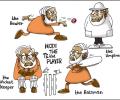
'Nationalism built on divisiveness cannot strengthen the country, or help the economy improve its performance,' points out T N Ninan.
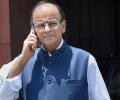
Manufacturing taxes, VAT will come down, assures Jaitley

'Every few days, I wake up with a sense of restlessness that time is running out'... 'We have created a due process for stressed assets to resolve, but there is no concrete plan in place for public sector bank balance sheets,' says RBI Deputy Governor Viral Acharya.

Good intentions and elaborate roadmaps apart, there is an urgent need for the Tamil Nadu chief minister to come up with branded schemes like MGR's meal scheme, asserts N Sathiya Moorthy.
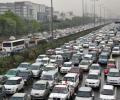
Auto sector has nothing to look forward to in the Budget.
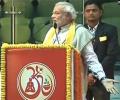
The Bharatiya Janata Party's prime ministerial candidate Narendra Modi today promised to review and reform of the taxation system in the country, saying the existing structure is a burden on common man.

A delegation of opposition parties including Rahul Gandhi, Sharad Pawar and Left leaders on Wednesday met President Ram Nath Kovind seeking repeal of the three farm laws against which thousands of farmers have been protesting on various borders of the national capital.

The farmer representatives were unanimous in seeking repeal of the 3 laws.
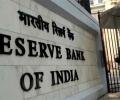
Headed by Urjit Patel, MPC for the fourth straight time kept the repo rate unchanged, at which it lends to the banks, at 6.25 per cent. The reverse repo, at which RBI borrows, will be 6 per cent.

'Breaking down silos and ensuring a more integrated governance process is just as important to performance.' 'It has been a major priority in the last six years, especially in national security,' External Affairs Minister Dr Subrahmanyam Jaishankar points out when delivering the Sardar Patel Memorial Lecture-2020: India and the Post-Covid World.

Goldman Sachs forecasts real GDP growth to accelerate to 7.9 per cent in FY17 from a projected 7.5 per cent in FY16.

'Experts are not ruling out further pain as global factors cannot insulate India from the aftermath.'
Advice to the new finance minister from former RBI governor Raghuram Rajan: 1. Clean up banks by reviving projects that can be revived after restructuring debt. 2. Improve governance and management at public sector banks. 3. De-risk banking by encouraging risk transfers to non-banks and the market. 4. Reduce the number and weight of government mandates for public sector banks, and for banks more generally.

'Stick to the known quality names, avoid short term thinking and don't be in a hurry to book profits on your winners.'

Make In India and the reduction in barriers of trade will potentially create a growth environment.

The demand for OROP has been projected as an unambiguous issue but a good policy argument must have a sound economic element.

You have to really bungle to produce 5.7 per cent growth under the conditions this government is currently facing, says Mihir S Sharma.

Analysts have started talking about at least a 25 bps cut immediately.

'A recent compromise by the state government is accepting NEET exams for medical entrance.'

Similarities between NDA and UPA on some key policy issues are now becoming too stark to be ignored, says A K Bhattacharya.
